
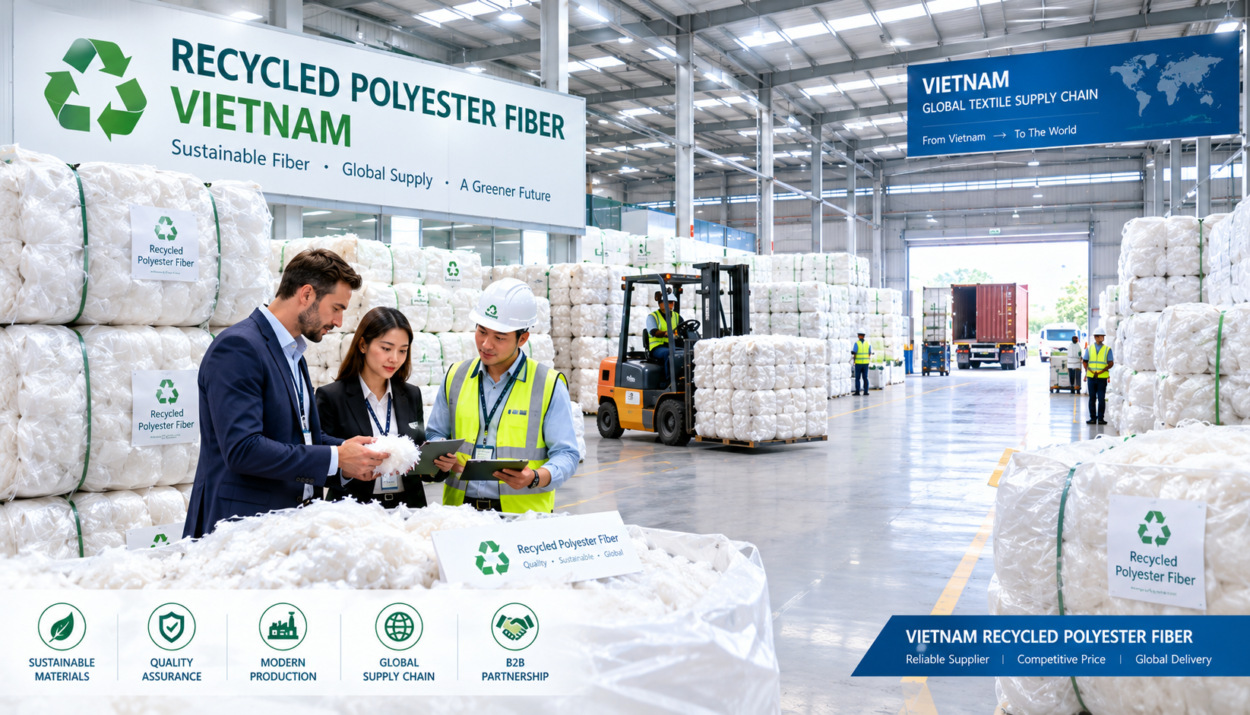
For manufacturers buying recycled polyester staple fiber, selecting a supplier is a decision that can affect product quality, production efficiency, purchasing costs, and supply planning.
Vietnam is one country international buyers can consider when exploring Asian sourcing options. However, buyers should not select a supplier based on location or a low quotation alone. The right partner must be able to offer a suitable product, communicate technical details clearly, and confirm the commercial and logistical requirements of the order.
Rather than presenting an unverified ranking of companies, this guide explains how to identify and evaluate recycled fiber suppliers in Vietnam.
Vietnam Recycled Fiber is a sourcing and trading intermediary that helps coordinate buyer inquiries with relevant suppliers, subject to product availability and confirmation.
What Should You Look for in a Recycled Fiber Supplier?
1. A Product Range That Matches Your Application
Start by confirming that the supplier offers the type of fiber you need.
Depending on availability, buyers may inquire about:
- Solid recycled polyester staple fiber
- Hollow polyester staple fiber
- Hollow conjugated fiber
- Siliconized fiber
- Fiber for nonwoven applications
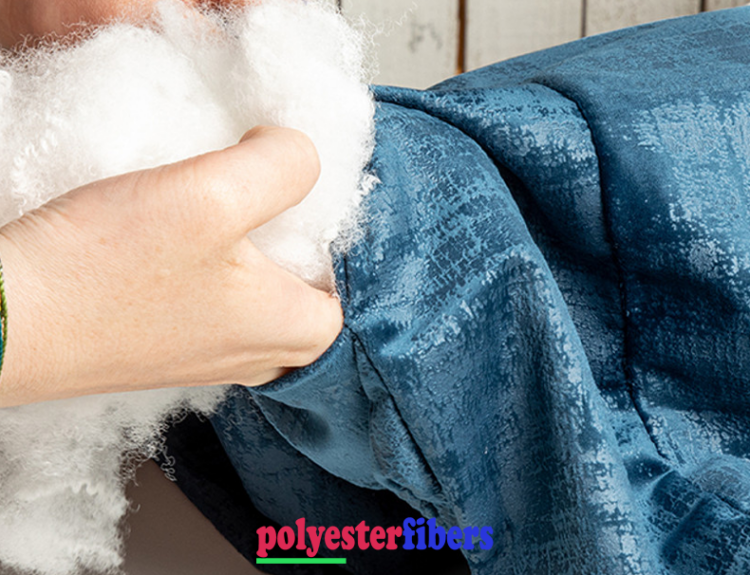
- Fiber for mattress and furniture padding
- Fiber for pillow and cushion filling
- Selected grades for spinning applications
A broad product list does not automatically mean that every grade is available. Ask for the current specification sheet for the exact product under consideration.
2. Technical Documentation
A reliable sourcing process depends on clear technical information.
Ask for the parameters relevant to your application, which may include denier, cut length, fiber type, color, finish, strength, elongation, moisture, and contamination limits.
Not all parameters apply to every product. The supplier should clarify which specifications are available, which are guaranteed, and which can be tested or documented.
3. Quality Consistency
A fiber that meets the specification once may still need to be assessed for consistency across shipments.
Discuss how product conformity is evaluated and how discrepancies are handled. Where appropriate, agree on samples, inspection procedures, testing methods, and acceptance criteria before confirming the order.
For industrial buyers, it is useful to consider the effect of fiber quality on machine operation, finished-product performance, and production waste.
4. Certification and Recycled-Content Documentation
Some buyers require specific recycled-content certification or supply-chain documentation.
If certification is a purchasing requirement, ask for the exact documents and verify their validity and scope. Confirm that they apply to the relevant supplier, product, facility, and transaction.
Do not assume that all recycled polyester fiber products have the same certification status.
5. Export and Logistics Capability
Before selecting a supplier, confirm the arrangements it can support for your destination.
Discuss packaging, loading, shipment scheduling, Incoterms, payment terms, export documentation, and communication during transit.
The buyer should also check destination-specific import requirements with its customs broker or relevant authority.
A Practical Supplier Evaluation Checklist
Use the following checklist when screening potential suppliers.
| Evaluation area | What to verify |
|---|---|
| Product range | Does the supplier offer the exact fiber type? |
| Specification | Is a current technical datasheet available? |
| Quality control | Are test parameters and acceptance criteria clear? |
| Certification | Are required documents valid and applicable? |
| Supply availability | Can the supplier confirm the requested quantity? |
| Order requirements | Are MOQ and packaging details clear? |
| Commercial terms | Are price, currency, payment, and Incoterms stated? |
| Delivery | Is the lead time confirmed? |
| Communication | Are questions answered clearly and promptly? |
| Problem resolution | Is there an agreed process for discrepancies? |
Use this checklist consistently so that different suppliers are assessed against the same criteria.
Questions to Ask Before Requesting a Quotation
Before asking a supplier to quote, prepare the basic information it needs.
Product questions
- What fiber types and grades are currently available?
- Can you provide the technical datasheet?
- Which quality parameters are specified or tested?
- Is the requested finish or color available?
Commercial questions
- What is the minimum order quantity?
- What quantity can be supplied for the requested schedule?
- What are the payment terms?
- How long is the quotation valid?
Logistics questions
- What packaging options are available?
- Which Incoterms can be offered?
- What is the estimated production or dispatch lead time?
- Which shipping documents can be provided?
Compliance questions
- What certification or recycled-content documentation is available?
- Does the documentation meet the buyer’s specific requirements?
- Are additional inspections or tests possible?
The answers should be confirmed in writing before the buyer makes a purchasing decision.
Why the Lowest Price May Not Be the Best Choice
Price is important, but it evaluated alongside technical suitability and total purchasing cost.
A quotation that excludes freight or other charges may appear lower than an offer covering more services. Similarly, a fiber that does not meet production requirements can lead to waste, machine interruptions, or finished-product inconsistencies.
Compare equivalent specifications and delivery terms. Where possible, evaluate the supplier’s product against agreed quality criteria before committing to recurring orders.
Direct Supplier or Sourcing Partner: Which Is Better?
Some buyers prefer to communicate directly with a manufacturer. Others may need assistance finding and coordinating with potential suppliers in a country where they do not have an established network.
A sourcing partner can help organize technical requirements, communicate the buyer’s inquiry, and coordinate discussions with relevant suppliers. However, buyers should understand the role of the intermediary and confirm who will issue the quotation, contract, invoice, and shipping documents.
Vietnam Recycled Fiber positioned as a trader and sourcing intermediary, not a manufacturer. Product and commercial commitments confirmed by the actual supplier or contracting party.
How to Build a Long-Term Supplier Relationship
After selecting a supplier, establish a clear process for repeat purchasing.
- Keep an approved specification for each product grade.
- Record agreed prices, delivery terms, and quotation validity.
- Confirm quantity and schedule for every order.
- Track product conformity and shipment performance.
- Document any discrepancies and corrective actions.
- Review the supplier relationship before increasing order volume.
A structured process makes it easier to identify recurring issues and improve purchasing decisions over time.
Frequently Asked Questions
Who are the top recycled fiber suppliers in Vietnam?
Supplier suitability depends on the fiber type, technical requirements, certification needs, order volume, and destination. Buyers should evaluate actual suppliers against a consistent checklist rather than rely on an unverified ranking.
Can I source solid recycled polyester fiber from Vietnam?
You can submit an inquiry for solid recycled polyester fiber. Availability, technical specifications, quantity, and delivery arrangements confirmed by the relevant supplier.
What documents should I request from a supplier?
Depending on your needs, request a technical datasheet, relevant test reports, applicable certification documents, commercial quotation, and shipment documentation.
How can I compare supplier prices fairly?
Make sure the product specification, quantity, packaging, Incoterm, destination, payment terms, and documentation requirements are comparable.
Is Vietnam Recycled Fiber a manufacturer?
No. Vietnam Recycled Fiber positioned as a sourcing and trading intermediary. We help coordinate inquiries with relevant suppliers; actual product and commercial details require supplier confirmation.
Looking for a Recycled Fiber Supplier in Vietnam?
If your company manufactures nonwoven products, mattresses, pillows, carpets, geotextiles, or other products using polyester staple fiber, send us your sourcing requirements.
Include your application, fiber type, specification, expected quantity, destination, and required documentation. Vietnam Recycled Fiber can help coordinate an inquiry with relevant suppliers, subject to availability and confirmation.
Email: vietnamrecycledfibers@gmail.com
Website: https://vietnamrecycledfiber.com
Supplier capabilities, product availability, quality, certification, pricing, and delivery terms independently confirmed before purchase.
About VIETNAM RECYCLED POLYESTER FIBER
VIETNAM RECYCLED POLYESTER FIBER We partner with numerous factories and manufacturers in Viet Nam and other Asian countries. We supply various and different polyester staple fiber such as hollow conjugate siliconized and non-siliconized, hollow non conjugated fiber, hollow slick fiber, black solid fiber, brown fiber, green fiber, filling fiber, polyester fiber, recycled polyester fiber, spinning fiber. All are GRS and OEKO TEX certified.
Our recycled Polyester Staple Fiber is of good quality and competitive price, which used in the application of filling polyester pillows, mattress, cushions, quilting, comforters, padding, wadding, stuffed toys, carpets, felts, automotive nonwoven industry and home textiles. We are well-known for our excellent customer service and we would like to have long-term business cooperation with customers from all over the world.
Please contact us for long-term cooperation!
Mr. HARRY
Website: vietnamrecycledfiber.com
Youtube: Vietnam Recycled Polyester Fiber