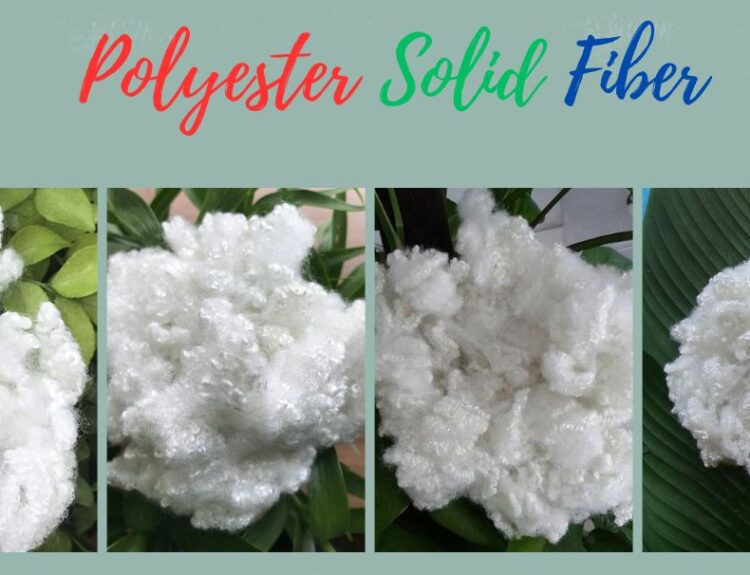

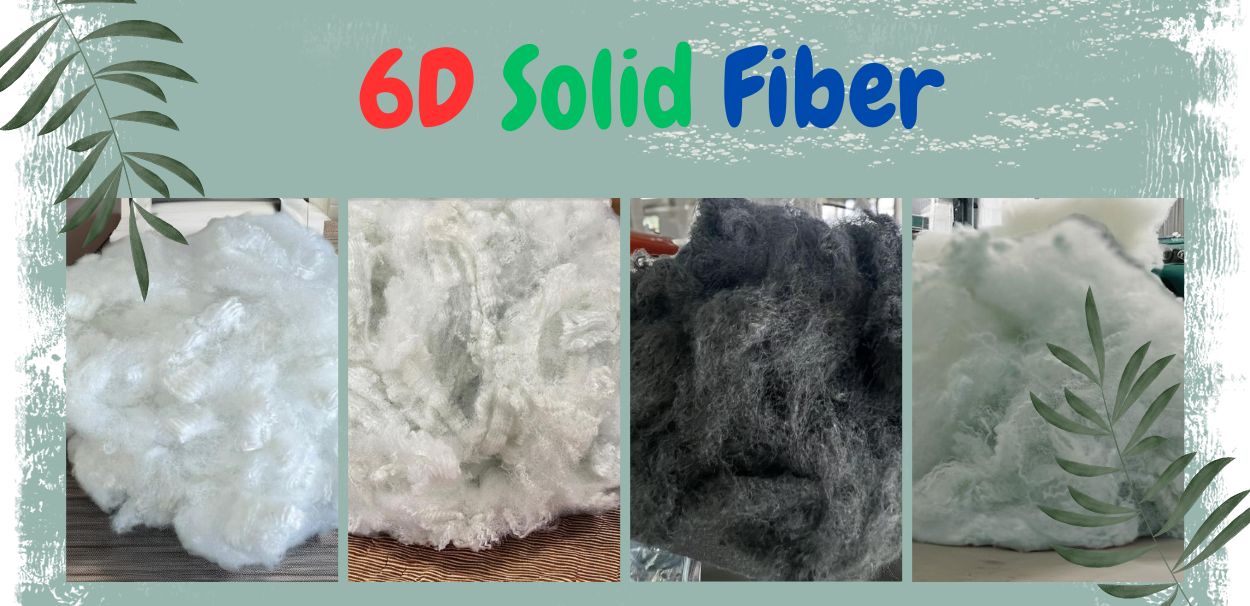
In the growing world of synthetic fibers, 6D Solid Fiber stands out as a versatile and reliable material used across various industries. With its uniform structure, excellent resilience, and cost-efficiency, 6D Solid Fibers has become a preferred choice for manufacturers seeking consistency and performance in their products. But where is 6D Solid Fibers used, and why has it gained so much traction in recent years? Let’s take a deep dive into the applications, advantages, and industries that rely on this type of polyester staple fiber.

What is 6D Solid Fiber?
Before exploring its applications, it is essential to understand what 6D Solid Fibers actually is. The term “6D” refers to the denier, a unit measuring the thickness of the fiber. A 6D fiber means the fiber has a moderate thickness—finer than coarser deniers like 15D or 20D but thicker than microfibers like 1D or 3D.
The word “solid” indicates that the fiber has a solid cross-section, as opposed to hollow fibers which contain one or more hollow spaces inside. This solid structure makes the fiber denser, stronger, and more resistant to wear and tear. Typically made from polyester, 6D Solid Fibers can be virgin or recycled, depending on the manufacturer and intended application.
Where is 6D Solid Fiber Used?
1. Home Furnishings
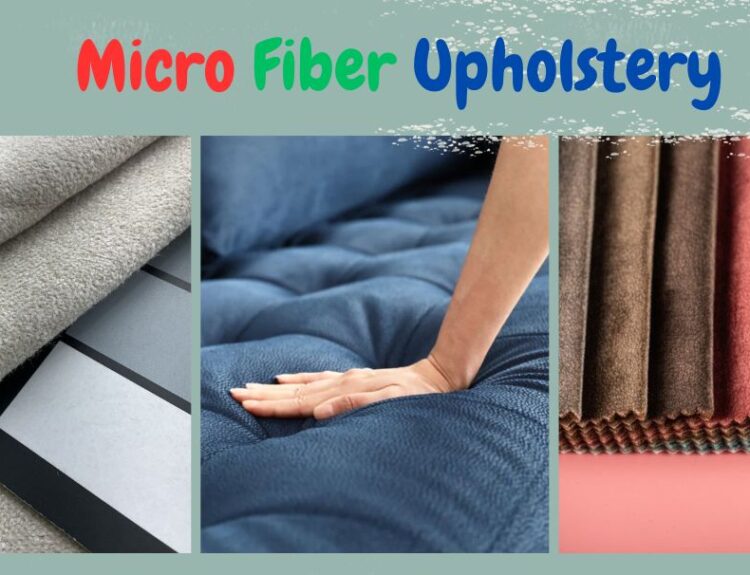
One of the most widespread uses of 6D Solid Fiber is in home furnishing products. Its durability and consistency make it a great filling material for:
- Pillows
- Cushions
- Mattresses
- Sofas
- Bolsters
Thanks to its moderate denier, 6D Solid Fibers provides a balance of softness and structure. It is not as soft as lower-denier fibers, but its resilience and loft retention make it ideal for products that need to maintain their shape over time. When blended with siliconized coatings, the fiber also gains anti-static and anti-dust properties, increasing consumer appeal.
2. Nonwoven Fabric Industry
6D Solid Fiber is also extensively used in nonwoven fabric production. Nonwoven fabrics are used in multiple applications, including:
- Automotive insulation
- Soundproofing panels
- Wall coverings
- Geotextiles
- Industrial filters
In these applications, the fiber’s solid structure contributes to the strength and integrity of the nonwoven product. Additionally, the uniformity of 6D Solid Fibers helps in producing smooth and consistent fabric rolls, which are essential for large-scale industrial use.
3. Toy and Stuffed Animal Filling
Manufacturers of toys and stuffed animals prefer 6D Solid Fibers as a filling material because of its:
- Even distribution
- Soft bounce-back ability
- Lightweight characteristics
Stuffed toys require fiberfill that is durable but still offers a pleasant tactile feel. 6D Solid Fibers provides the ideal middle ground—dense enough to give shape and structure, yet soft enough for comfort and cuddling.
4. Garment Padding and Interlinings
In the textile and garment industry, 6D Solid Fiber is often used for padding jackets, coats, and interlinings. It provides bulk without too much weight and helps in maintaining body warmth by acting as an insulating layer. It is particularly favored in:
- Winter jackets
- Ski suits
- Thermal innerwear
Unlike natural fillings, polyester-based 6D Solid Fiber does not absorb moisture easily, making it suitable for cold and damp environments.

5. Automotive Industry
Automotive manufacturers use 6D Solid Fiber in various components inside vehicles, such as:
- Car seat padding
- Headrests
- Sound-absorbing panels
- Trunk liners
Its density and stability contribute to long-lasting performance under temperature fluctuations and physical stress. Moreover, recycled 6D Solid Fiber supports automakers aiming to improve the sustainability of their supply chains.
6. Carpets and Rugs
Carpet and rug manufacturers sometimes use 6D Solid Fiber in the underlay or intermediate layers of their products. This provides:
- Shock absorption
- Thermal insulation
- Noise reduction
Because it resists matting and compression, 6D Solid Fiber helps maintain the plush feel and durability of rugs and carpets even in high-traffic areas.
7. Filtration and Technical Applications
Although not as common as in textile and furniture applications, 6D Solid Fiber can be used in filtration media and technical textiles, especially when a combination of strength and moderate fineness is needed. These include:
- Air filters
- Oil absorbent pads
- Protective fabric layers
The fiber’s solid structure offers strength and filtration accuracy while remaining cost-effective.
Advantages of Using 6D Solid Fiber
- Versatility: Can be used in multiple industries.
- Durability: Maintains shape and structure over time.
- Affordability: Lower cost compared to natural fibers or higher-tech synthetic options.
- Thermal Insulation: Effective for products like winter clothing and bedding.
- Eco-Friendly Options: Available in recycled polyester variants.
- Customizable: Can be siliconized, hollow-blended, or mixed with other fibers.
6D Solid Fiber vs. Other Denier Fibers
- Compared to 3D Fiber: 6D is thicker and offers more structural support.
- Compared to 15D/20D Fibers: 6D is softer and more flexible, making it suitable for products requiring moderate firmness without bulkiness.
This balance makes it ideal for applications that require both comfort and structure—hence its popularity in the furniture, toy, and apparel industries.
Conclusion
From household items to automotive parts and technical fabrics, the applications of 6D Solid Fiber are both broad and essential. Its balanced characteristics—neither too soft nor too firm—make it a highly adaptable material in manufacturing. As more industries shift toward sustainable materials, the recycled variants of 6D Solid Fiber are also becoming increasingly favored.
If you’re a manufacturer or product designer seeking a reliable, cost-effective, and eco-friendly filling or padding solution, 6D Solid Fiber is worth considering. Its consistent performance, widespread availability, and adaptability make it a solid choice—literally and figuratively.
About Vietnam Recycled Fiber
VIETNAM RECYCLED FIBER partner with numerous factories and manufacturers in Viet Nam and other Asian countries. In general we supply various fiber such as hollow conjugate siliconized and non-siliconized, hollow non conjugated fiber, hollow slick fiber, black solid fiber, brown fiber, green fiber, filling fiber, recycled polyester fiber, spinning fiber… All are GRS and OEKO TEX certified.
Our recycled Polyester Staple Fiber is of good quality and competitive price. We are well-known for our excellent customer service and we would like to have long-term business cooperation with customers from all over the world.
Please contact us for long-term cooperation!
Mr. HARRY
Website: vietnamrecycledfiber.com
Youtube: Vietnam Recycled Polyester Fiber